
Let's talk about the stuff nobody puts in the glossy brochure.
Right now in Raleigh, there are a handful of things completely blindsiding home buyers. I'm talking about mistakes that can cost thousands (sometimes tens of thousands) of dollars, and I've watched it genuinely hurt people who were so excited to call this place home.
But don't panic! I'm going to walk you through the six biggest issues catching buyers off guard right now, and then I'll give you a clear game plan to protect yourself from every single one.
If you're buying in Raleigh, or even thinking about it someday, grab a coffee. This one's worth the read.
I'm Alley Buscemi, founder of AlleyCo Homes. I've been guiding families through this market for years, and a big part of that job is helping them sidestep exactly these traps. I've also moved across six states myself, so trust me when I say I know how it feels to buy somewhere new and wonder what you don't know yet.
1. New construction is making resale homes harder to sell
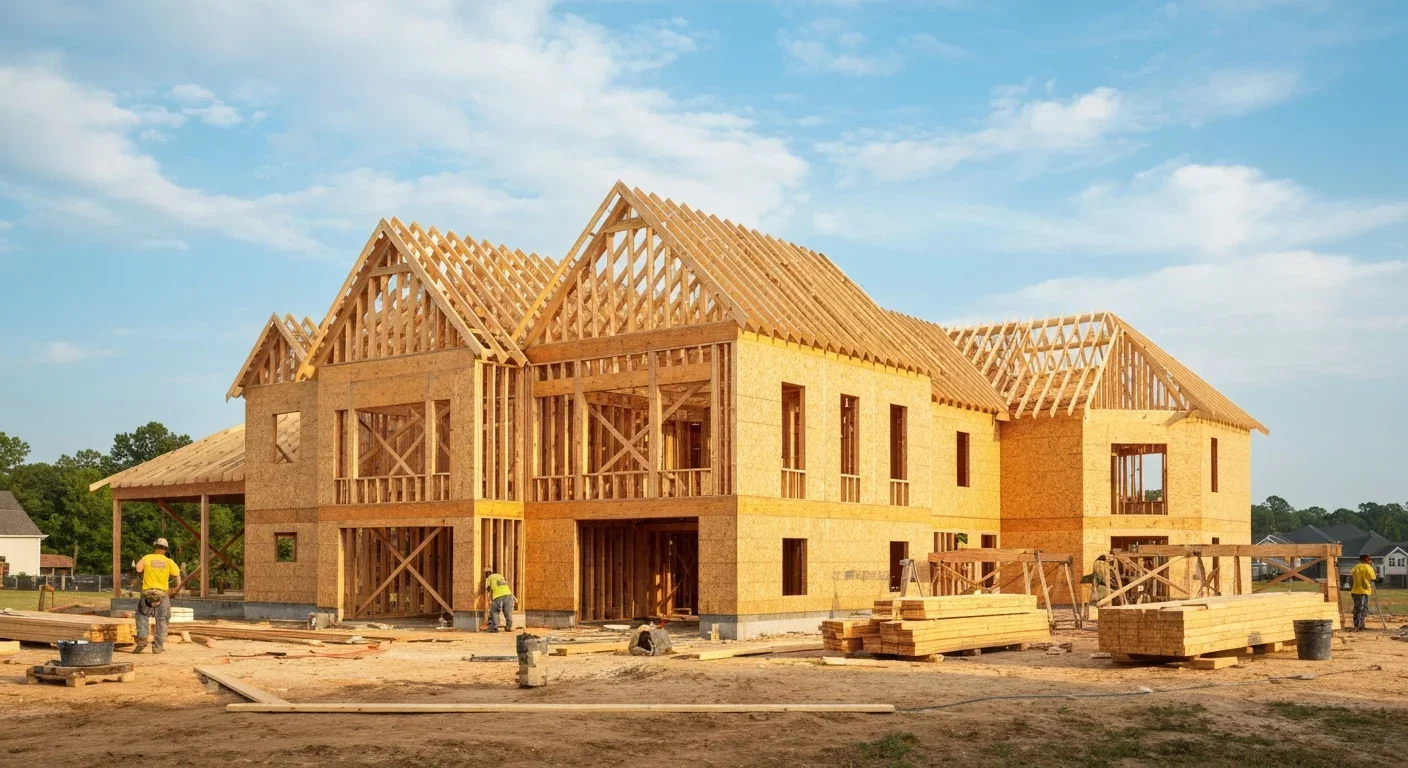
Honestly? Almost nobody is talking about this one. Raleigh's new construction boom is creating a bit of a nightmare for people trying to sell a home that isn't brand new.
Here's what the numbers looked like:
19,161 new homes were listed in Wake County in 2024, a 15% jump from 2023
Builders are offering up to $15,000 in closing cost credits plus free design upgrades
In Clayton, Zebulon, and Fuquay-Varina, 48% to 55% of listings are new construction
Builders are spending big on marketing and buying down interest rates (which is a hard thing for an individual seller to compete with)
So picture this. The median home price in Raleigh hit around $451K in July 2025. Now imagine you're trying to sell your four-year-old home, and the builder down the street is selling the exact same floor plan, brand new, with credits and a lower rate. Who do you think wins that showing?
If you're planning to move again in three to five years, buying a resale home in an area saturated with new construction could leave you underwater when it's time to sell. The appreciation just may not be there to outrun the competition.
2. Road widening could change your "quiet" street
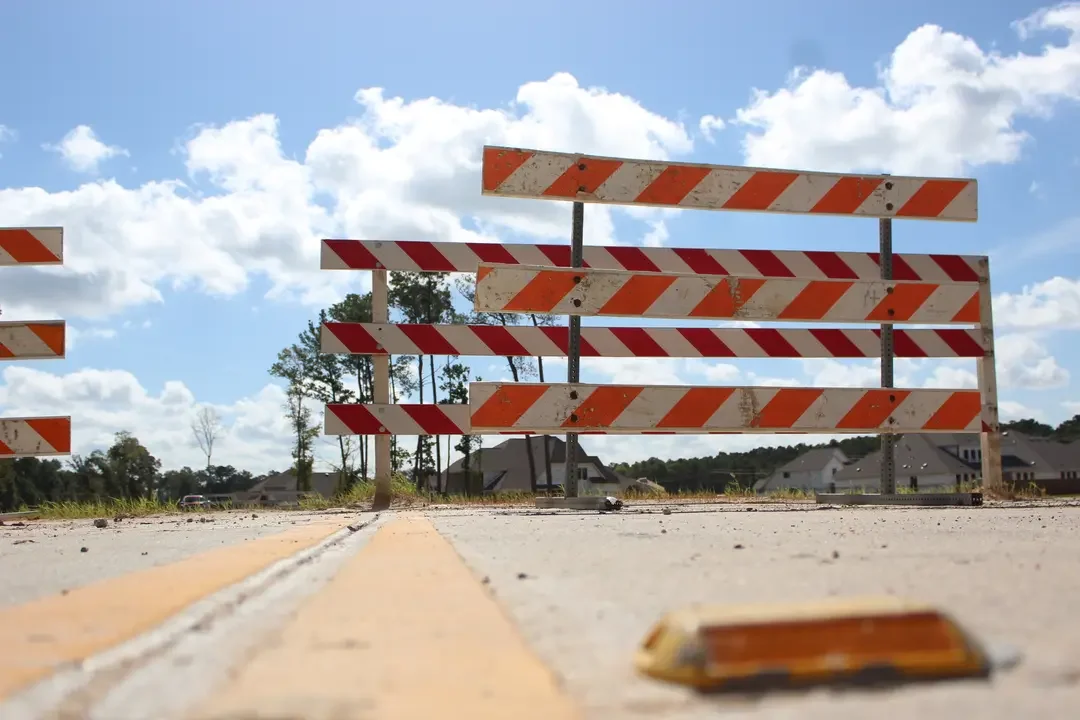
This one is brutal, because most buyers have no idea what's coming to their (quote unquote) quiet residential street.
A few of the big projects reshaping the Triangle:
I-440 Beltline: widening from four lanes to six, a $346.2 million project
Capital Boulevard: becoming a six-lane, controlled-access toll highway
Complete 540: extending the Outer Loop, with Phase 2 expected to wrap by 2028. It required 14.7 miles of noise walls built from about 4 million bricks. The catch? Homes built after the highway plans were set don't qualify for that noise protection.
Blue Ridge Road: running about two years behind schedule, now expected to finish by the end of 2026
Properties sitting on today's two-lane roads may end up next to four-lane roads with frontage roads. That sweet, quiet street you fell in love with could be a lot louder in five to ten years.
Hold that thought, because I'll show you how to check for this before you buy.
3. Low appraisals can derail a great deal
You found the perfect house in the perfect spot. Amazing! But this issue can still kill the deal.
When a market moves as fast as Raleigh's, there's a gap between what you agreed to pay and what the bank thinks the house is worth. Prices were up 6.1% year over year, and appraisers have a hard time keeping pace. Banks look backward at comparable sales, so they tend to be conservative.
When an appraisal comes in low, you typically have three options:
Pay the difference in cash
Renegotiate the price
Walk away and lose your due diligence fee
And here's the real talk. Sellers in Wake County rarely agree to price reductions, and gaps can reach $20,000 to $50,000 on a typical deal. That shifts your loan-to-value ratio and your monthly payment.
Say you planned to put 20% down, and the appraisal comes in $30,000 low. If you cover that gap, you're suddenly putting a lot more cash into the house than you budgeted for. Not exactly the fun kind of surprise.
The good news? There are ways to plan for this (more on that below). But first, here's where North Carolina's system makes things even trickier.

4. North Carolina's non-refundable due diligence fee
This is the big one, especially for my relocation friends. If you're coming from another state, North Carolina's due diligence system can feel like a whole different language.
Here's roughly what buyers are paying:
Home price
Typical due diligence fee
$350,000 to $500,000
About $5,000
$500,000 to $800,000
$5,000 to $7,000
$800,000 and up
$10,000 or more
In the most competitive bidding wars, fees have climbed as high as $100,000. Before COVID, a fee of $500 to $2,000 was pretty standard. Now it can be 1% to 2% of the purchase price.
So how does it work? That fee goes straight to the seller, and it's non-refundable no matter what your inspections turn up. In a lot of other states, a bad inspection lets you walk away with your money. Here, once you decide not to buy, that fee is gone. You could find major foundation issues or a plumbing disaster and still lose that $5,000.
And speaking of losing money, this next one has cost hundreds of North Carolina homeowners their entire homes.

5. HOAs in North Carolina have real foreclosure power
North Carolina HOAs have unusually broad foreclosure powers compared to most states, and they're not shy about using them.
More than 5,500 HOA foreclosure actions have been filed since 2018
Over 600 homeowners have lost their homes to HOA foreclosure
45% of those foreclosures happened in Mecklenburg County alone
The costs can snowball fast:
Late fees of up to $20 a month or 10% of the unpaid assessment
Interest of up to 18% a year on overdue amounts
Attorney fees and court costs
A lien can be filed after just 30 days of delinquency
Foreclosure can follow once dues are 90 days unpaid
North Carolina isn't a "super lien" state, but HOA liens still take priority over most other claims except existing mortgages and tax liens. In plain English? A few hundred dollars in unpaid dues can grow into the loss of your entire home.
Even if you dodge every financial trap on this list, this last one hits your daily life.
6. Congestion in areas with nowhere left to grow
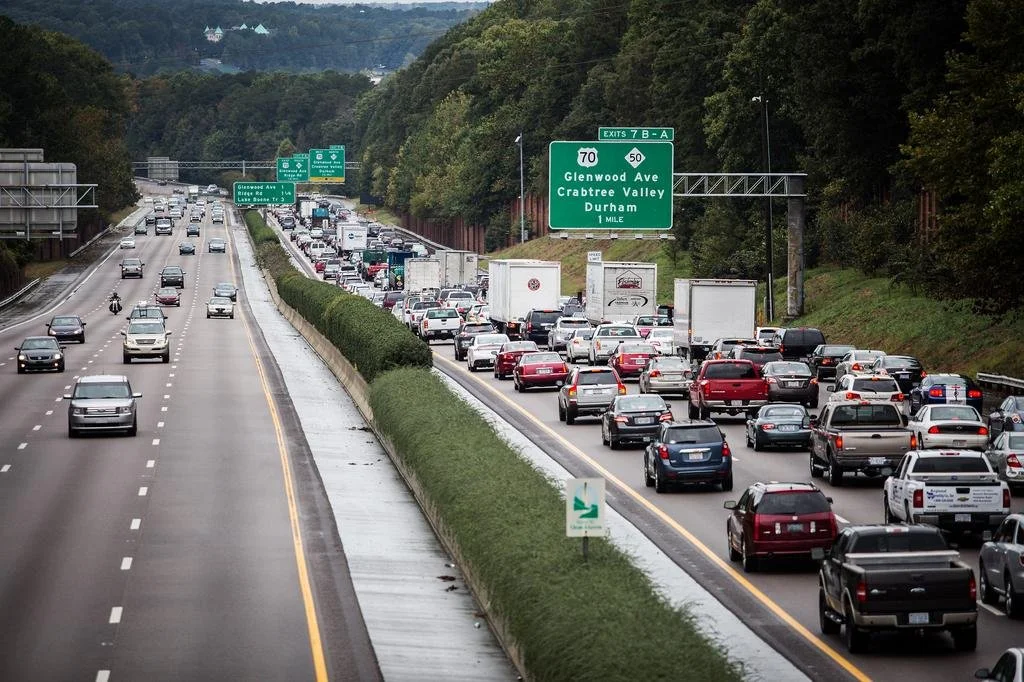
Raleigh ranks only #228 globally for congestion, which sounds pretty great, right? But locals are still losing real time to traffic, and it's getting worse.
Residents lost an average of 31 hours to traffic in 2024, up 19% from 2023
The average commute is about 23.6 minutes
Morning rush stretches to about 11 minutes per 6 miles, and evening rush to about 13
The usual suspects:
The Capital Boulevard corridor, with chronic congestion
Blue Ridge Road construction, adding 15-minute delays to routine trips
The I-440 Beltline, still a major chokepoint at rush hour
School drop-off zones in high-density areas during peak times
The tricky part is that many of these congested areas have no room to expand, especially older neighborhoods with two-lane roads that simply can't be widened. Add new high-rise development to the mix, and that traffic isn't going anywhere.

How to protect yourself from all six
Okay, here's the part you really want to know. Grab a pen!
1. Work with a local expert agent. Your agent should be in the loop on anything that could affect your home's future value. That means researching HOA covenants and enforcement history, digging into upcoming road projects and zoning changes, sizing up new construction competition nearby, and making sure your inspections happen inside the due diligence window.
2. Go in with a due diligence strategy. Budget 1% to 2% of the purchase price for your due diligence fee, and know going in that this money is at risk. Then use that window to its fullest with structural, electrical, plumbing, HVAC, pest, and radon inspections. Once that period ends, there's no inspection contingency to fall back on.
3. Research infrastructure plans. Keep an eye on NCDOT project databases, CAMPO transportation plans, and local development approvals. Big projects like 540 and Capital Boulevard are planned years in advance, so the information is out there if you know where to look.
4. Prepare your finances for the full picture. Homeowners insurance rates in North Carolina started rising 7.5% in June 2025, so shop several quotes before closing. With more property revaluations coming in 2027, plan for gradual property tax increases. And factor in utility increases of about 3.5% a year through 2029.
5. Do your HOA homework. Review the HOA's financials, bylaws, and enforcement history. Ask about any planned special assessments for big repairs or improvements. And remember that 90-day foreclosure rule!
6. Analyze the new construction competition. Ask yourself three questions:
How much longer will the builder be active in this neighborhood?
What new developments are planned within a five-mile radius?
Am I buying during the closeout phase, or will the builder be competing with me for years?
So, are these deal-breakers?
Absolutely not! Raleigh's growth brings real opportunity and real risk, and the buyers who win here are simply the ones who walk in informed. You can absolutely plan around every single one of these.
If you're thinking about a move to Raleigh, please don't go it alone. I would love to help you find the right home without falling into any of these traps. Shoot me an email and let's chat.
And if you're wondering which Raleigh neighborhoods are actually worth your time and money, check out my video ranking the best and worst suburbs around Raleigh. A few of them might surprise you!
