Inside the Beltline: Where Raleigh’s Character Lives
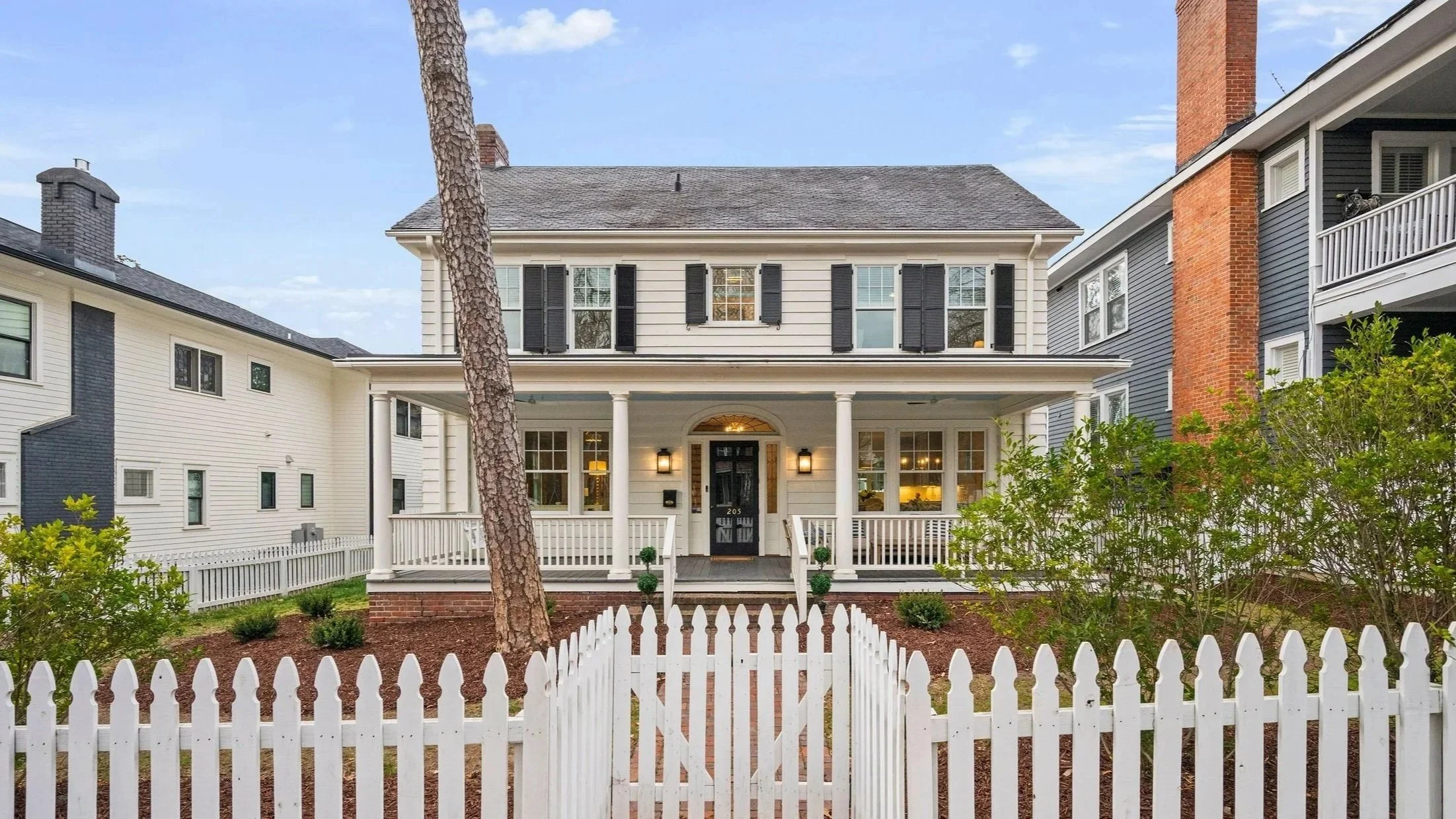
This is where Raleigh’s character lives closest to the surface: historic homes, walkable blocks, and a density of personality that the suburbs cannot replicate. Turnover is slow, inventory surfaces in small quantities each season, and well-priced homes move quickly, often with multiple offers.
The Neighborhoods Worth Knowing
Hayes Barton: ITB’s highest-priced historic neighborhood, walkable to restaurants and shops in Five Points.
Five Points: historic bungalows and mature canopy streets with a youthful, indie energy. Consider it Raleigh’s Brooklyn.
Historic Oakwood: Raleigh’s largest and oldest historic district, dating to the Civil War era. Victorian homes and Craftsman bungalows a short walk from downtown and the N Person St area. Legendary Halloween and other neighborhood events.
Boylan Heights: perched southwest of downtown with skyline views from Boylan Bridge. Walkable, creative, home to the annual ArtWalk.
Mordecai: the oldest neighborhood in Raleigh, a more accessible price point than some ITB neighbors with genuine historic character. Great, quirky restaurants and shopping in N Person St area.
Sunset Hills: quiet, close-knit, and residential. Pocket parks abound .A calm retreat inside the city.
Country Club Hills: quiet, elegant streets surrounding Carolina Country Club on the far north side of ITB, with easy access to North Hills.
Forest Park: One of Raleigh’s earliest subdivisions. Mature trees, generous lots, and early 20th-century homes that hold value consistently. Walkable to the Village District and Hillsborough Street.
What Buying ITB Actually Means
The homes are older, the lots are smaller, and the price per square foot is higher. What you are paying for is not square footage. It is walkability, architectural character, and the quality of life that comes from living in a neighborhood with real roots. Older homes carry older systems: budget for updates and approach every inspection carefully. Historic district guidelines affect what renovations are permitted, and a knowledgeable agent makes a significant difference here.
Inside the Beltline Market Trends (2026)
Homes under a million dollars will be modest in size or need considerable work; updated homes and new construction range from $1.5M to $4M+ (Redfin, March 2026; AlleyCo Homes market data, 2026). In the Five Points / Hayes Barton ZIP 27608, the median exceeds $905,000, with many sales at $1M+. Turnover is slow: buyers who succeed know which streets they want and move when the right property appears.
Pricing Inside the Beltline is genuinely difficult, because the house two doors down might not be a comp at all. That’s the first thing to press an agent on. More on choosing a listing agent in Raleigh and the pricing questions worth asking.
Who ITB Is Best For
Buyers who value character over square footage. Relocating executives who discover, after one walk down a canopy street, that the suburbs conversation is over. Professionals coming from San Francisco, Austin, NYC, Nashville, or Chicago who want walkability similar to the cities they’re leaving.
Inside the Beltline FAQs
What does “Inside the Beltline” mean in Raleigh?
It refers to the neighborhoods inside the I-440 Beltline loop, Raleigh’s historic core, including Hayes Barton, Five Points, Historic Oakwood, Boylan Heights, Mordecai, Sunset Hills, Country Club Hills, Forest Park and more.
How much does a home Inside the Beltline cost?
Homes under $1M are typically modest in size or need considerable work. Updated homes and new construction range from $1.5M to $4M+ (Redfin, March 2026). In the Five Points / Hayes Barton ZIP 27608, the median exceeds $905,000.
Which ITB neighborhood is the most prestigious?
Hayes Barton is ITB’s highest-priced historic neighborhood, walkable to Five Points restaurants and shops.
What should buyers know before purchasing a historic ITB home?
Older homes carry older systems, and historic district guidelines affect what renovations are permitted. Budget for updates and approach inspections carefully.
Thinking about an Inside the Beltline home? Alley Buscemi guides luxury buyers, sellers, and relocations here. Reach her at alley@alleycohomes.com or (630) 721 7501.