
The 6 Most Walkable Neighborhoods in Raleigh
Here's a fun fact that surprises almost every client I work with who's moving to Raleigh: the most walkable neighborhood in the city scores a 68 out of 100 on Walk Score. Sixty-eight! (Not exactly the sidewalks-everywhere life I got used to back in my New York days.)
So a lot of those "walkable" homes people pay top dollar for? You may still be driving for half your errands. And if you land in the wrong pocket, you're kind of stuck with it.
The good news is that walkable Raleigh absolutely exists. It just lives block by block. Below are the six pockets where you can genuinely live on foot, ending with a small, low-key one that might be the biggest surprise on the list.
A quick note on pricing before we start: I'm not going to throw a single number at you for any of these. The sources I checked use different boundaries and don't line up cleanly, and I'd rather give you nothing than give you something that sounds precise and isn't. In these neighborhoods, the exact block, the condition of the home, and (in the historic areas) the property's designation tell you far more than any online average. Use what you see online as a starting point, then let's compare real homes.
Grab a coffee (ideally one you walked to) and let's dive in.
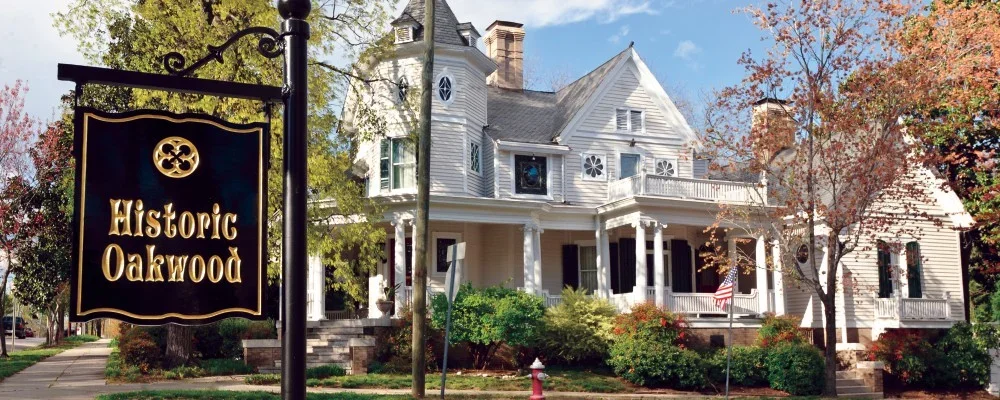
1. Historic Oakwood and Mordecai
Picture this: front porches tucked under enormous oak trees, the smell of fresh bread drifting down the block before you even reach the bakery, and doughnuts still coming off the line hot. That's just a normal Saturday morning here, and honestly, it's the perfect place to start.
Walk Score gives Oakwood a 68 ("somewhat walkable"), the highest of the six pockets on this list. To be clear, that's Walk Score's number, not an official Raleigh ranking, and your day-to-day can shift depending on your block.
You're just east of downtown, so you can stroll into the city center or stay close to home along the Person Street and Blount Street corridor. That's where you'll find restaurants, coffee shops, small local stores, and yes, that doughnut shop.
And the homes? They're a huge part of why walking here feels so different. Victorian-era beauties, Queen Anne details, and Craftsman bungalows, sometimes all on the same block. (The set stylist in me could wander these streets for hours.)
Much of Oakwood sits inside a National Register historic district, and there's also a separate local Historic Overlay District with its own rules. If you're buying here, check the designation on the specific property instead of assuming the same rules apply everywhere.
Mordecai is right next door and connects into that same corridor, so these two belong together. Mordecai Historic Park is a real anchor for the neighborhood, with historic grounds, exhibits, and guided tours. It's so much more than just another open park.
The tradeoff: the city's Blount and Person Street improvement project is still underway, so parts of the corridor are under construction right now. It's getting better as the work moves along, but your walk today may feel a little less polished than it will once it's done.
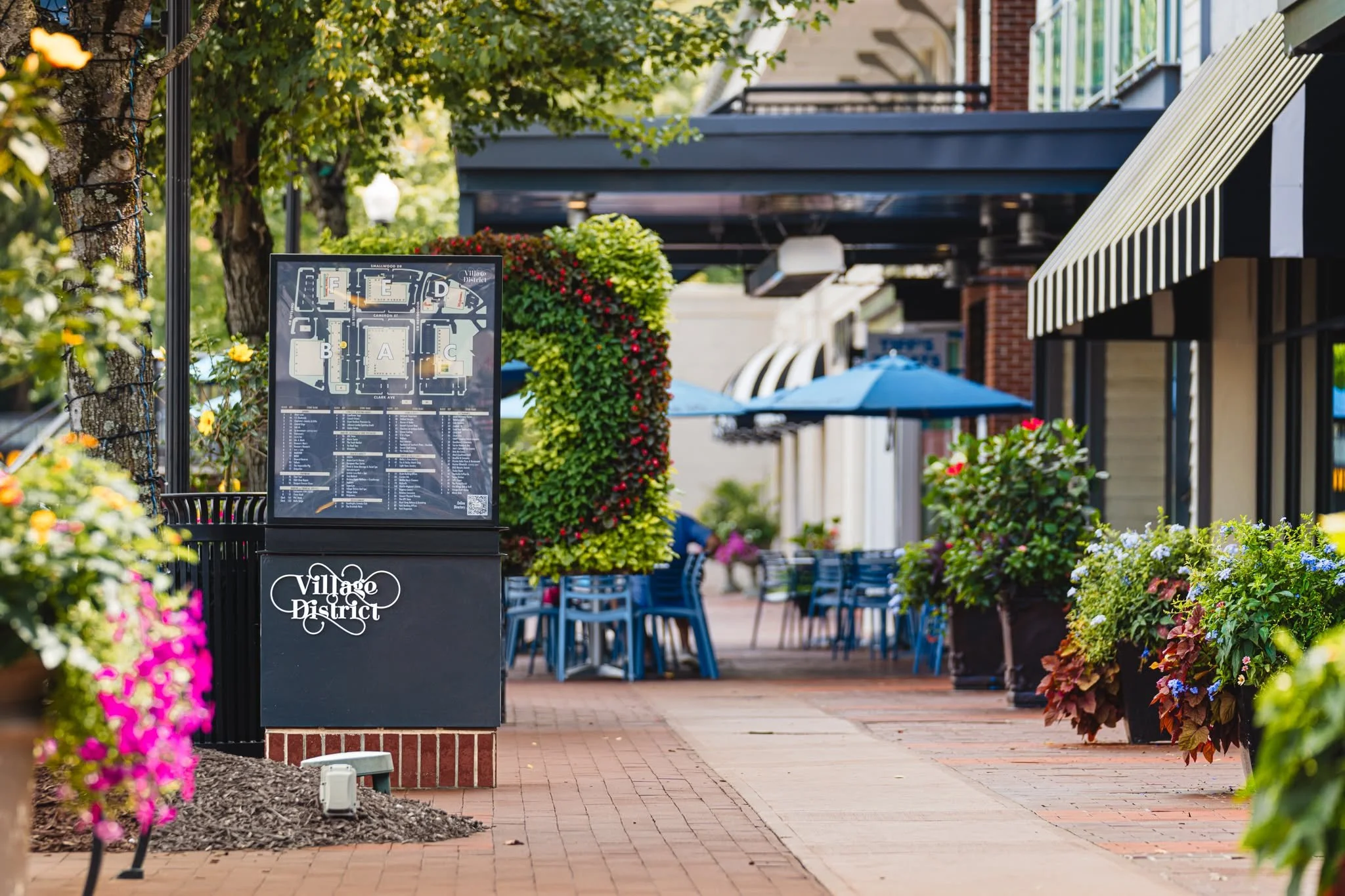
2. Forest Park and the Village District
If Oakwood leans on history, this next stop leans on convenience. The shops, restaurants, and places you'll use every day are already built, open, and waiting for you.
Forest Park (you'll still see it called Cameron Park in some of the city's historic records) has that settled, established feel. Big early twentieth century homes, mature trees, alleys, ravines, and streets that roll up and down instead of sitting on a flat grid.
What makes this pocket work is where you can walk to. The Village District sits right next door, and if you've been in Raleigh a while, you probably still hear people call it Cameron Village. The city describes it as North Carolina's first planned mixed-use development, meaning homes and shops were designed to sit close together from day one, so neighbors could walk over instead of hopping in the car for every little thing.
There's a full Harris Teeter right in the district, and having groceries that close genuinely changes how you live day to day. (Forgot the lemons for your dinner party? No crisis.) Around it, you've got restaurants, everyday shops, and regular events that make the Village District feel like a true neighborhood gathering place, not just a row of stores.
The tradeoff: not every street in Forest Park has a continuous sidewalk, and with the hills and terrain, the walk can feel different from one block to the next. When I say walkable here, I'm talking about the streets closest to the Village District. The farther in you go, the more that changes.
Still, groceries, dinner, shopping, and a place people actually gather, all this close together? That gives Forest Park a beautifully finished feel.

3. Five Points and Hayes Barton
Warm doughnuts fresh out of the fryer, a dessert case locals swear by, and a movie theater that's been around so long it feels like part of the family. You'll find all of it inside one small commercial pocket, and that's exactly why Five Points and Hayes Barton belong together.
Both neighborhoods lead to the same intersection, where Glenwood, Fairview, Whitaker Mill, and Bickett all meet. But once you wander onto the residential streets, they each have their own personality.
Five Points is a charming mix: bungalows, Craftsman homes, Foursquares, cottages, and a real variety of early twentieth century architecture sitting fairly close together.
Hayes Barton feels more formal. Think larger homes, period revival architecture, deeper setbacks, and more breathing room between the house and the street.
Same shared center, two very different vibes. (I love a neighborhood that can't be summed up in one sentence.)
If you're on one of the closest blocks, you can walk to Bright Spot Donuts, grab dinner at Ajja, stop for something sweet at Hayes Barton Cafe and Dessertery, or catch a movie at the Rialto Theatre, which still shows classics alongside current releases. Date night, handled. And Roanoke Park gives you a lovely green space right inside the neighborhood.
The tradeoffs: the city's transportation records point to some tricky crossings and turning traffic around that main intersection. And while you can connect to the Crabtree Creek greenway, that route isn't equally easy from every address.
So yes, this is a walkable pocket, but (say it with me) the exact block still matters.
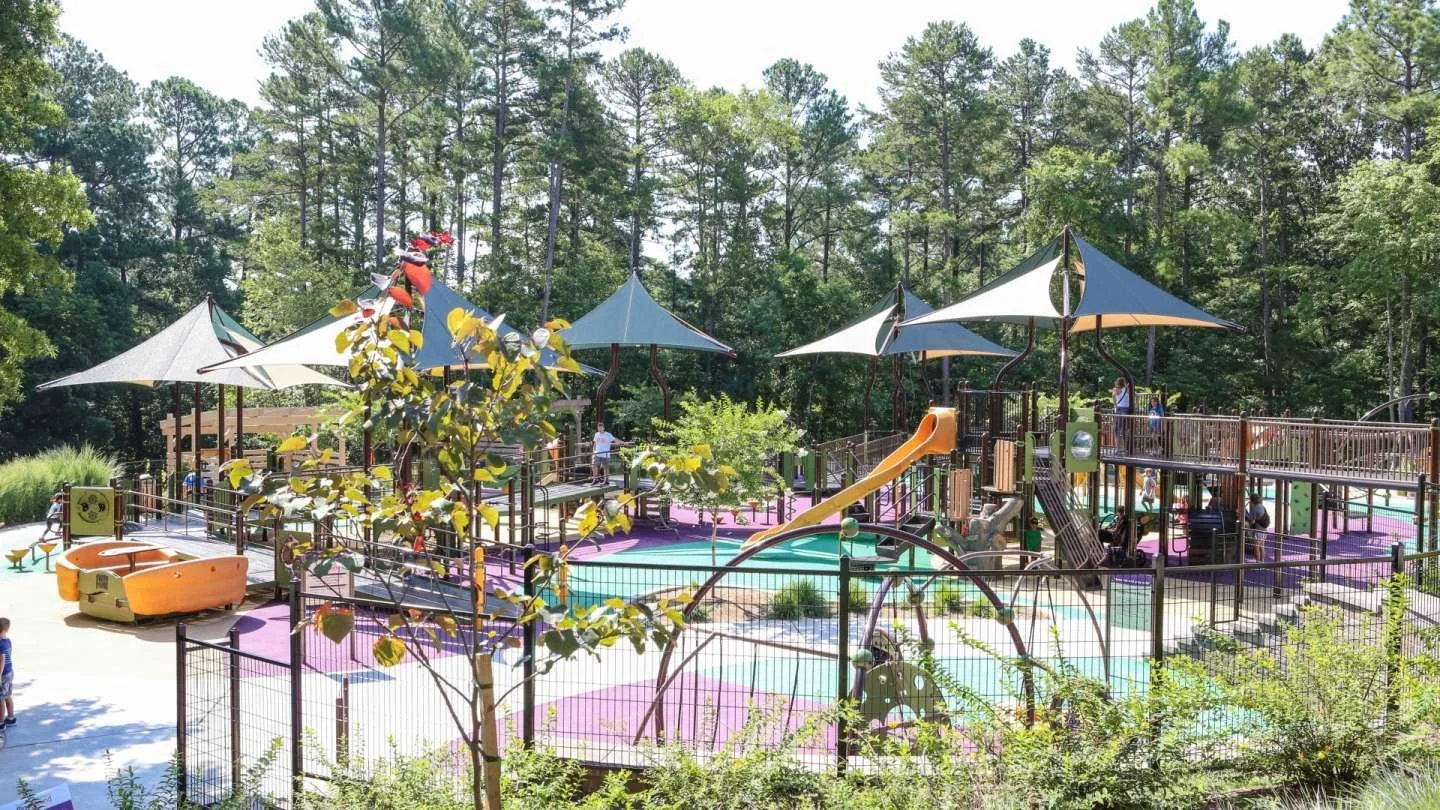
Laurel Hills Park
4. Laurel Hills, Old Raleigh, and Meredith Woods
Forget the cute main street for this one. This pocket earns its spot because of what's nearby, not because everything lines up along one adorable strip.
You're just outside the 440 Beltline around Edwards Mill, and walkability here works a little differently. Olde Raleigh Village is the practical center, with Harris Teeter and The Mill Raleigh close enough together that, from the nearest homes, you can walk over for groceries and grab a bite on the same trip. Efficiency and a glass of wine? Yes please.
I'll be honest, though: Edwards Mill carries plenty of traffic. It feels much more like a main corridor than a street you'd meander down for fun, so think of this as walking for errands more than walking for a leisurely stroll.
Where this area really shines is green space. Laurel Hills Park has a community center, an inclusive playground, a pond and nature area, and sports fields (my boys would live there if I let them). If you want something bigger, the North Carolina Museum of Art's Museum Park and William B. Umstead State Park are nearby too. Just know those two are a bike ride or short drive from most homes here, not a daily walk out your front door.
The neighborhoods themselves feel established and calm, with mature trees, larger lots, and a slower pace, all while keeping groceries and parks close. Your experience can change quite a bit from one street to the next, so the specific address (and the home and lot that come with it) really matters.
The bottom line: quieter streets, useful errands, and easy access to the outdoors.
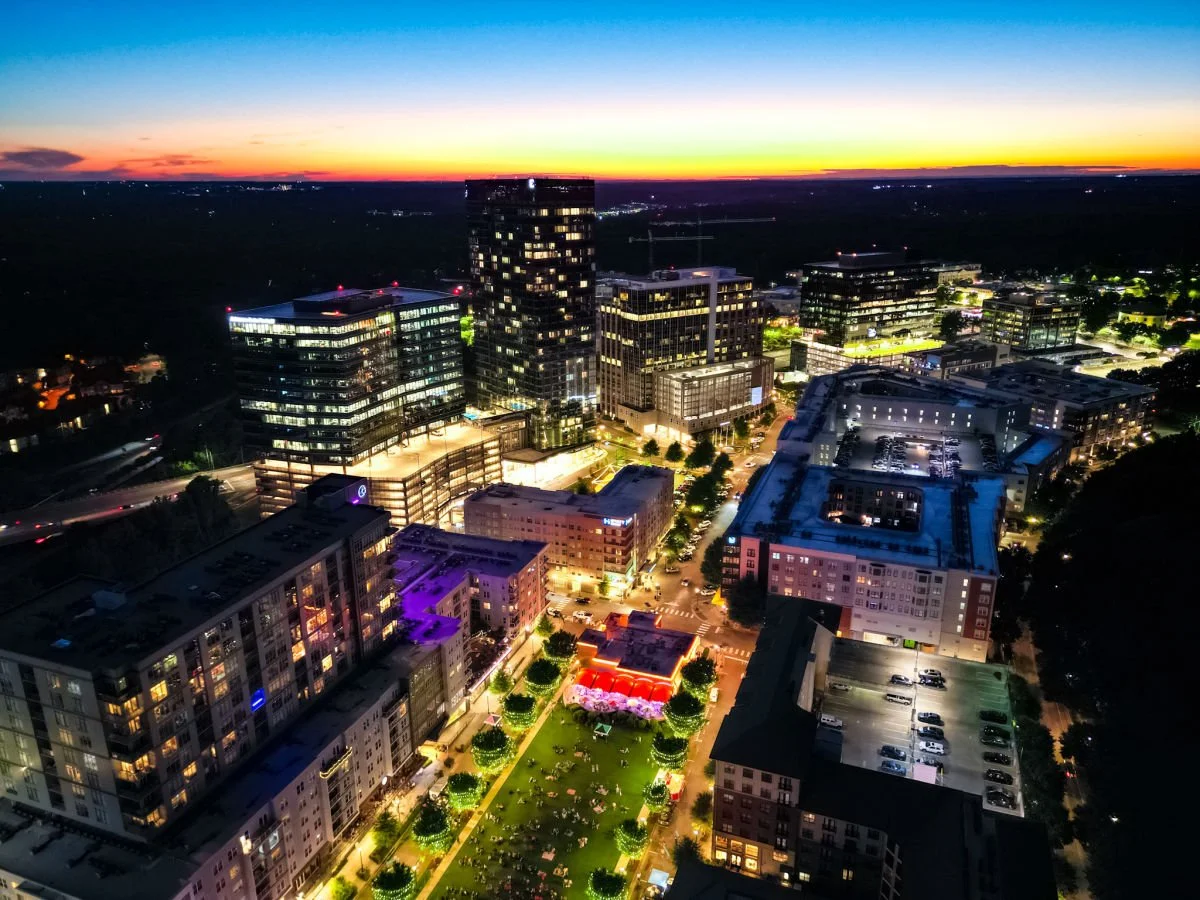
5. North Hills
If you want the most concentrated walk on this list, North Hills is probably your spot. Dinner, an evening in the park, a little shopping, a Target run, all without going far.
This is Raleigh's Midtown, a mixed-use core that brings homes, offices, restaurants, and shopping together in one district. You've got Harris Teeter, Target, and a long list of restaurants and everyday services all in the same area.
Midtown Park sits right in the middle and acts as the main gathering spot. They keep an active events calendar through the fall, so check the dates before heading over, since the schedule shifts throughout the season.
The important thing to know: this level of walkability is concentrated inside the North Hills core. Once you move into the surrounding residential streets, the experience changes, so don't expect every North Hills address to deliver this same kind of walk.
There's also North Hills Park, a separate city park that connects into the Crabtree Creek Greenway Trail system. It's a fantastic regional trail connection to have nearby, just keep in mind it's a different experience from the shopping and dining district.
North Hills gives you the most packed-together, everything-at-your-fingertips walk of the bunch, as long as you're close to that core.
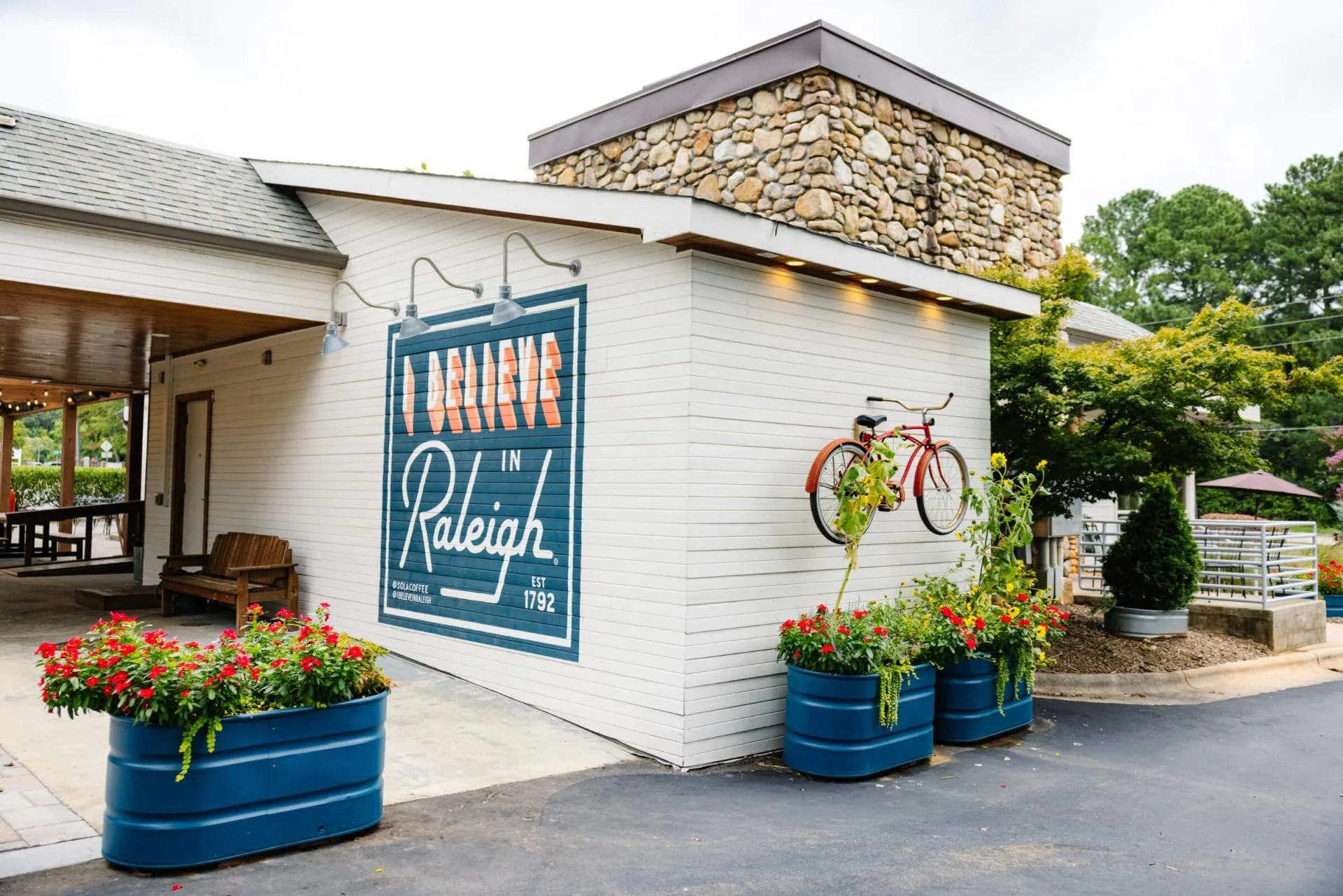
Sola cafe
6. Greystone
Coffee, tacos, and ice cream, all inside one little hub you can cross on foot in under a minute. Honestly? That's my kind of itinerary.
That's Greystone, and it's proof that walkability in Raleigh can show up on a much smaller scale, without the density (or the price tag people tend to expect with it).
Greystone is built around a village-style hub off Lead Mine Road in North Raleigh. It's the most compact spot on this list, and inside that little center you can grab coffee or lunch at Sola Coffee Cafe, tacos at Gonza, and ice cream at Two Roosters without turning it into a cross-town mission.
Right next door is the Greystone Recreation Center, a public indoor rec space. Trust me, that becomes a very nice amenity on a Raleigh summer afternoon when you'd much rather walk somewhere with air conditioning.
You've also got Mine Creek Greenway nearby, which connects to Shelley Lake Park and its paved loop trail (a gorgeous spot for a morning run, if you ask me).
The tradeoff: the Lead Mine Road sidewalk project and some improvements along Mine Creek are still underway, so those connections are getting better but aren't all finished yet.
I wouldn't call Greystone a secret bargain based on any one number floating around online. I'd think of it as a smaller, lower-key walkable option worth comparing home by home against everything else on your list.
And that's exactly why I love ending here. Greystone is small, but the walk works.
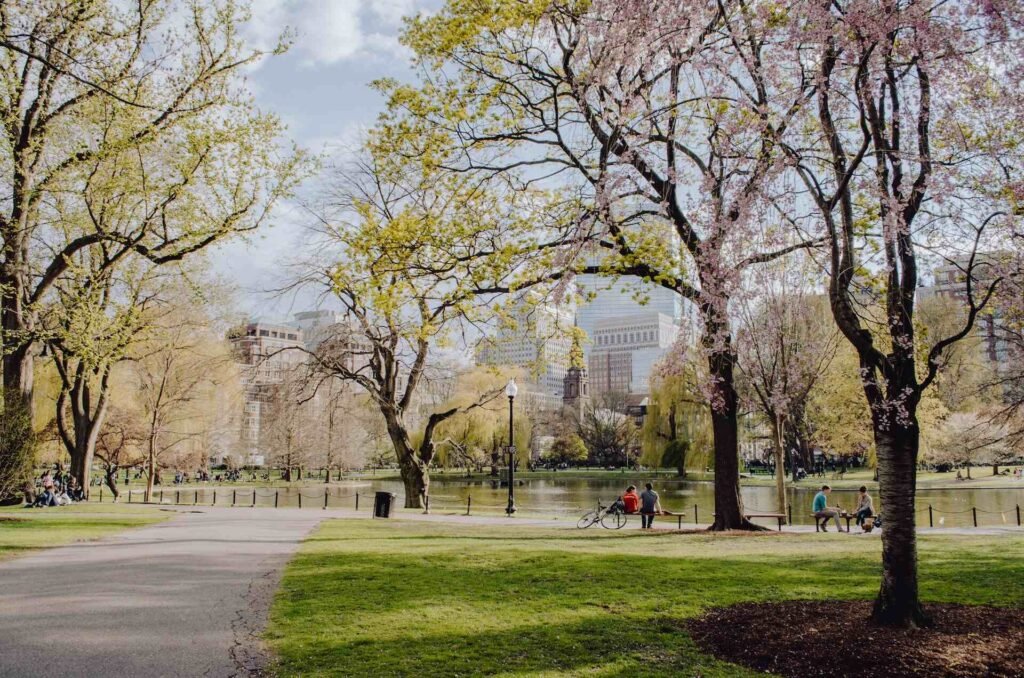
Pullen Park
So, Which Walk Is Yours?
Six pockets, six totally different ways to live on foot. If there's one thing I want you to take away, it's this: the biggest difference between them comes down to scale. A historic corridor, a planned village, a shared intersection, an errand hub, a buzzing Midtown core, a tiny village center. Once you start looking at Raleigh through that lens, your whole home search starts to look different (in the best way).
And as you've probably noticed by now, the block you're standing on can make all the difference.
If one of these areas feels like the kind of place you'd love to walk every single day, I'd love to hear from you. Email me and I'll pull current listings in that exact corridor before they reach the wider market.
Still deciding between Raleigh, Charlotte, Durham, or Greensboro for your job and your budget? I've got a full city-by-city breakdown for you. Spoiler: the city with the biggest airport doesn't necessarily give you the easiest travel experience.
Happy walking, friends. Here's to finding the block that feels like home.
